Curricula 066 645 Data Science 066 932 Visual Computing 066 936 Medical Informatics The course is organised in a blocked-way starting 23rd of April 2026. The aim of the course is to provide insights into medical image analysis, especially in practical clinical and industrial applications. We will discuss the following topics in the lecture part … Continue reading Medical Image Processing and Machine Learning (VU) →
Location: Seminarraum FAV 01 A (Seminarraum 183/2), in person 1st Meeting: Wednesday March 4th, 2026; 10:00 – 12:00 Further Information: TISS und TUWEL In this course, the analysis of image sequences (videos, depth and thermal data) is dealt with in depth: this includes the topics of sensor technology, motion detection, object tracking, scene reconstruction and … Continue reading Scene Understanding and Surveillance →
Course description The lecture will cover advanced computer vision methods in depth: • Texture, Scenes, und Context • Local- and Multiscale Representations • Interest Points, Corners • Scene Emergent Features • Scene Recognition, Bag of Words, SIFT • Clustering, Pyramid Matching, Support Vector Machine • Deep Learning, CNNs • Perceptron, Linear Basis Function Models, RBF … Continue reading Grundlagen der Computer Vision →
The seminar provides a forum for discussion of master students’ work and an opportunity for students to share ideas and news. Procedure: The following deliverables are part of the evaluation of this seminar: MTS (Master Thesis Specification) presentation: After the formal application for the master thesis at the study deans in TISS (see the faculty … Continue reading Seminar für Diplomand_innen für Visual Computing →
Course description This lecture covers Deep Learning for automatic image and video analysis, such as classifying images into categories or detecting and distinguishing persons. Deep Learning has lead to breakthroughs in these fields; in certain problems, the performance of current methods based on this technology is similar or even better than that of humans – … Continue reading Deep Learning for Visual Computing →
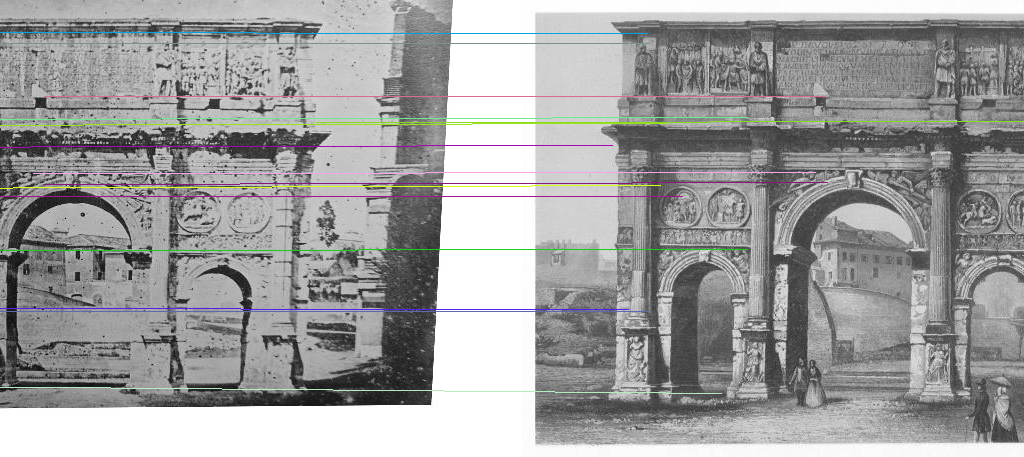
Introduction: FR. 08.04.2016, 13:00 – 15:00, Seminarraum 183/2 Date: FR. 13:00 – 15:00 (see schedule for dates) Place: Seminarraum 183/2 The goal of this lecture/exercise is to get a fundamental understanding of registration techniques used in computer vision, medical imaging, biological imaging and brain mapping. Registration is necessary in order to be able to compare or integrate … Continue reading 2D and 3D Image Registration (VU) →
Termin: MO, 10:15 – 12:00 Ort: Sem. FAV 01 A Inhalt Dieses Seminar bietet ein Forum zur Diskussion der Arbeit von DiplomandInnen und die Möglichkeit zum Austausch von Ideen und Neuigkeiten unter den Studierenden. Termin und Organisation Alternierend MO von 10:15 – 12:00, im Sem FAV 01 A Termine im SS 2020 23.03.2020 27.04.2020 18.05.2020 … Continue reading Computer Vision Seminar für DiplomandInnen (SE) →
Curricula: 066 453 Biomedical Engineering 066 507 Information and Communication Engineering 066 645 Data Science 066 932 Visual Computing 066 936 Medical Informatics The aim of the cours is to provide insights into medial image analysis, especially in practical clinical and industrial applications. Accompanying the lecture Medical Image Processing (183.269), students learn to solve medical … Continue reading Medizinische Bildverarbeitung (UE) →
Lecturer: Dr. Georg Langs (CSAIL, MIT) The lecture is organised in a blocked-way starting 23rd of April 2026. The aim of the course is to provide insights into medical image analysis, especially in practical clinical and industrial applications. We will discuss the following topics in the lecture: Medical imaging modalities Segmentation Model based detection and … Continue reading Medical Image Processing (VO) →
Termin: Dienstag 13:00 – 15:00, teilweise 13:00 – 17:00 Ort: Seminarraum FAV 01 A (Seminarraum 183/2) Modus: Präsenz Thema im WS 25/26: Automatische Dokumentanalyse Der 2. Teil des Seminars “Wissenschaftliches Arbeiten” wird am CVL von Prof. Robert Sablatnig gemeinsam mit Rafael Sterzinger im Wintersemester abgehalten. Es dient primär als Einführung in die wissenschaftliche Arbeitsweise, von der … Continue reading Wissenschaftliches Arbeiten (SE) →
